Search Engines
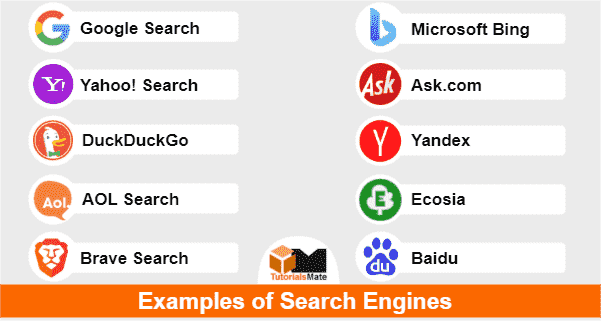
Ok, now as we took care of the Operating System, Browser it's time for Search Engines. And in advance I say, no there will be no google in this list (lol).
That's because we would not like to be targeted for ads and having collected our data by company or companies that appear to be friendly to your privacy and data and apparently they see and store all our movements, conversations and more. We would do it for many reasons, either to prevent ourselves from unnecessary expenditures, prevent from trackers e.g. location trackers, profiling us etc.
Before we start yet, I have to mention that there are a ton more search engines, than I thought there are. Therefore I will not discuss each one but will discuss only 6 and for more knowledge I highly encourage to read this article.
Let's first understand the fundamentals of how these systems operate before we list the details on each search-engine. This knowledge is crucial for appreciating the technical differences between privacy-focused and traditional engines.
The Web Crawler: Your Digital Librarian
A web crawler (also called a bot or spider) is an autonomous software agent that systematically browses the web to discover and index content. Think of it like a tireless librarian that never sleeps. Here's how it works:
Discovery: The crawler starts with a list of known URLs, then follows hyperlinks to discover new pages
Fetching: It downloads the HTML, CSS, and other content from each page
Indexing: The content is analyzed and stored in a massive database (the search index)
Processing: Text is extracted, links are catalogued, and metadata is recorded
Updates: Crawlers continuously revisit pages to detect changes
The crawled data is stored in an inverted index — a data structure that maps every word on the web to the pages containing that word. This allows lightning-fast lookups when you search for a query.
The Search Algorithm & Ranking System
When you submit a query, the search engine doesn't re-crawl the web — it queries its pre-built index. The ranking algorithm determines which results appear first. Traditional engines like Google use factors like:
- Relevance: How well the page matches your query keywords
- Authority: Link count and quality (PageRank)
- Personalization: Your search history, location, device, and browsing behavior (the privacy killer)
- Click-through rates: Which results users click on
- Freshness: How recently the page was updated
The Privacy Problem in Search
Here's where traditional search becomes invasive. When you search Google:
- Your IP address is logged
- Your search query is stored and linked to your account/device
- Cookies track you across the web
- Your behavior is profiled to personalize ads
- This data is cross-referenced with your other Google services (Gmail, YouTube, Android)
This creates a detailed profile of your interests, location, health concerns, financial status, political beliefs, and more. That's the data economy that funds free search.
And in order to prevent companies or even governments from taking advantage of your searches, you should use private search engines.
1. DuckDuckGo
Location: Paoli, Pennsylvania, United States
Founded: September 25, 2008
CEO/Founder: Gabriel Weinberg
Market Share: ~2% (highest among privacy engines)
DuckDuckGo is the heavyweight of private search — and for good reason. It's been my personal choice because the entire ecosystem they've built goes beyond just search.
I personally use DDG as my search-engine together with other products offered by DDG, but more on that in next posts.
How DuckDuckGo Works
Unlike many competitors, DuckDuckGo doesn't rely on a single source. Its search results come from a hybrid of over 400+ sources:
- Bing API: Primary source for general web results
- DuckDuckBot: DDG's own web crawler that supplements Bing results
- Wolfram Alpha: For computational queries
- Yahoo! Search BOSS: Historical data
- Yandex: International coverage
- Wikipedia: Knowledge panels
This is crucial because it means DDG isn't fully dependent on Microsoft's infrastructure. They've invested in building their own crawler (DuckDuckBot) to create partial independence.
Privacy Architecture
DDG's privacy model is straightforward:
- Zero Tracking: No IP address logging, no search history storage, no user profiling
- No Search Leakage: Your search query isn't passed to the websites you click on (this alone is huge)
- Encryption: All connections use HTTPS, preventing ISP snooping
- No Cookies for Tracking: Only essential cookies for functionality
- Global Privacy Control (GPC): Auto-signals opt-out preferences to websites
Pros
✅ Largest privacy search community — best network effects
✅ Actual independence — uses own crawler + multiple sources
✅ Clean interface — no bloated UI
✅ Respectable search quality — Bing's index is solid
✅ Full ecosystem — everything integrates
✅ Open source contributions — DuckDuckHack community
✅ Transparency — clear about what they don't collect
Cons
❌ Depends on Microsoft Bing — During 2024 Bing outages, DDG stopped working
❌ Less personalized results — No history means generic suggestions
❌ Limited independent index — DuckDuckBot is supplementary, not primary
❌ Ad-supported model — Non-personalized ads still shown
❌ Search quality inconsistency — Sometimes results lag behind Google
❌ Premium required for full privacy — Basic version still has limitations
The Real Talk
DDG is solid if you want the path of least resistance. The ecosystem approach means you get privacy across multiple touchpoints. But here's the thing — it's still fundamentally dependent on Bing's infrastructure. That 2024 outage proved it.
2. StartPage

Location: The Hague (Den Haag), Netherlands
Founded: 2006
Ownership: Dutch company, part of System1 (US-listed)
Market Share: ~0.06%
StartPage is the proxy-based privacy champion. If you want to understand sophisticated privacy architecture, this one's worth studying.
The Architecture: Proxy-Based Anonymization
Here's what makes StartPage different from DDG — it uses a middleman approach:
- Your Query: You search on startpage.com
- Premise Servers: Locked cabinets with non-US administrators
- Your IP Removed: All identifying info stripped (full IP, not just last octet)
- Query to Google: Startpage's servers ask Google for results (no user info attached)
- Results Returned: Google sees Startpage, not you
- You Get Results: Back to your browser without tracking
This is clean. Google literally doesn't know who's searching. The encryption uses:
- SSL/TLS: Secure socket layer between you and Startpage
- Perfect Forward Secrecy (PFS): Each session gets unique encryption keys
- HTTPS Everywhere: All connections encrypted
Why Google Results Matter
StartPage literally serves Google's search results but anonymizes your query. This is a trade-off:
Pro: You get Google-quality results (often considered the best)
Con: You're still dependent on Google's index, just with privacy wrapping
Pros
✅ Google-quality results — Best-in-class search
✅ True anonymity — Full IP removal, not partial
✅ EU jurisdiction — GDPR protections, privacy-first legislation
✅ Transparent operations — Explains technical flow clearly
✅ Anonymous View feature — Proxy browsing for extra privacy
✅ No account required — Works anonymously out of the box
✅ Endorsed by privacy experts — Edward Snowden recommends it
Cons
❌ Completely dependent on Google — No independence if Google changes
❌ Tiny market share — Niche product, limited resources
❌ Slower than direct Google — Added proxy layer = latency
❌ Limited feature set — Minimal instant answers compared to DDG
❌ Less aggressive crawler — Supplementary indexing only
❌ Owned by System1 — US company owns the parent (though Dutch HQ adds protection)
Technical Depth
The premise server setup is where the magic happens. Unlike traditional architectures, the servers are:
- Physically locked in cabinets
- Managed only by non-US staff (avoiding US legal jurisdiction)
- Isolated from cloud providers (avoids Patriot Act issues)
- Running their own anonymization pipeline
This is more robust than DDG's approach because there's no direct connection between your query and Google's servers.
3. Brave Search
Location: San Francisco, California, USA
Founded: June 2022 (beta), fully released
Parent Company: Brave Software, Inc.
Current Status: Growing, recently hit 100% independence
Brave Search is the young gun with serious ambitions. This is what a true independent index looks like.
The Independence Factor
Here's what makes Brave radical: it's building its own web index from scratch.
| Aspect | Brave | DuckDuckGo | StartPage |
|---|
| Search Index | Own independent index | Bing (80%+) + own crawler | Google |
| Dependence | Minimal Big Tech | High (Microsoft) | High (Google) |
| Index Size | 93% of results from own index | Supplementary | 0% |
| Crawling | Brave owns the crawler | DuckDuckBot supplement | No crawling |
This is huge. Brave doesn't have to negotiate with Microsoft or Google. They built their own.
How It Works
- Web Crawling: Brave's crawler indexes the entire web
- Independent Storage: Results stored in Brave's servers
- Community Feedback: Users can upvote/downvote to improve results
- Goggles: Custom ranking filters users create
- No Bing/Google: Zero reliance on Big Tech indexes
Privacy By Design
Brave Search doesn't track because it wasn't built to track:
- No User Profiles: Engine designed from ground-up for privacy
- No Cookies: Zero tracking cookies by default
- No Browsing Data: Device info not collected
- No IP Logging: IP addresses not stored
- Optional Web Discovery Project: Users can opt-in to help improve results (anonymously)
Innovative Features
Goggles: This is brilliant. You create custom ranking rules:
Example Goggle:
Boost scientific papers
Hide social media
Prioritize academic sources
Downrank clickbait
Others share their Goggles, creating community-curated search experiences.
Discussions: See real discussions about topics (Reddit threads, forums) integrated into results.
AI Summarizer: Generates concise answers with cited sources (not hallucination-prone like competitors).
Pros
✅ True independence — Own index, no Big Tech dependencies
✅ Private by architecture — Not bolted on as afterthought
✅ Goggles feature — Community-driven ranking customization
✅ Growing rapidly — 100M+ monthly active users (Brave browser)
✅ Excellent privacy defaults — Zero tracking, zero profiling
✅ Web Discovery Project optional — Can contribute anonymously
✅ US-based but transparent — Open about design principles
✅ Premium option — Ad-free for supporters
Cons
❌ Young search engine — Still refining result quality
❌ Different results than Google — Learning curve for power users
❌ Smaller index — 93% own index still maturing
❌ Brave browser required for best integration — Works standalone but better with ecosystem
❌ US jurisdiction — No GDPR-level protection (though privacy-first design)
The Blockchain Angle
Brave is built by people who understand decentralization. Their philosophy of "no Big Tech dependency" aligns with blockchain thinking. They're even working on integrating Web3 concepts into search (cryptocurrency tipping, decentralized indexing discussions).
Summary of pre-last post
The split turned out to be more restrictive, and i had to split this article in 2 parts so see you in the last part of my first dev.to article !