For the past few years, the AI image generation narrative was dominated by closed-source giants. Midjourney and DALL-E set the bar high, but they also set up a walled garden: subscription fees, strict censorship, and zero visibility into the underlying model.
Fast forward to 2026, and the script has flipped. The developer community, powered by open-source innovations, hasn't just caught up—it's forged a new path. We are seeing a massive shift towards models that run locally, generate in milliseconds, and offer pixel-perfect control.
At the center of this revolution is a new breed of efficient, accessible models like Z-Image and FLUX, which are proving that you don't need a data center to create masterpiece art.
The Need for Speed (and Low VRAM)
The biggest barrier to entry for local AI has always been hardware. Running a massive 12B parameter model required a GPU that cost as much as a used car. But optimization has become the new frontier.
Frameworks like Z-Image Turbo have changed the game. By distilling knowledge from larger models and optimizing the inference pipeline, developers can now generate high-quality images in sub-second times on consumer hardware.
"Optimization isn't just about speed; it's about accessibility. When a model runs on a laptop, it democratizes creativity."
We are seeing developers integrate these lightweight models into everything from game engines to real-time design tools. For a deep dive into how these speed gains are achieved, check out the architectures behind Z-Image Turbo, which utilizes aggressive quantization and distilled steps to run on as little as 8GB VRAM.
Control is King
The "prompt and pray" method is dead. Professional workflows require control. You can't just tell an AI "make a logo"; you need to specify the exact curves, the font weight, and the negative space.
This is where the open-source ecosystem shines. Tools like ControlNet and IP-Adapter started the trend, but now we have entire node-based operating systems for AI art, such as ComfyUI.
These tools allow developers to pipe outputs from one model into another, use edge detection to guide composition, and even swap faces with consistent identity preservation. It's programming for visuals.
The Rise of "One-Click" Complex Workflows
While node-based graphs are powerful, they are complex. The trend in 2026 is abstracting this complexity. New tools are wrapping these complex ComfyUI workflows into simple APIs or clean UIs.
For instance, Z-Image's image-to-image capabilities allow users to sketch a rough layout and have the AI fill in the details in real-time, effectively bridging the gap between manual artistry and generative power.
Photorealism Without the Subscription
One of the main selling points of Midjourney was its distinct "aesthetic." It just looked better out of the box. But models like FLUX and the latest iterations of Stable Diffusion have cracked this code.
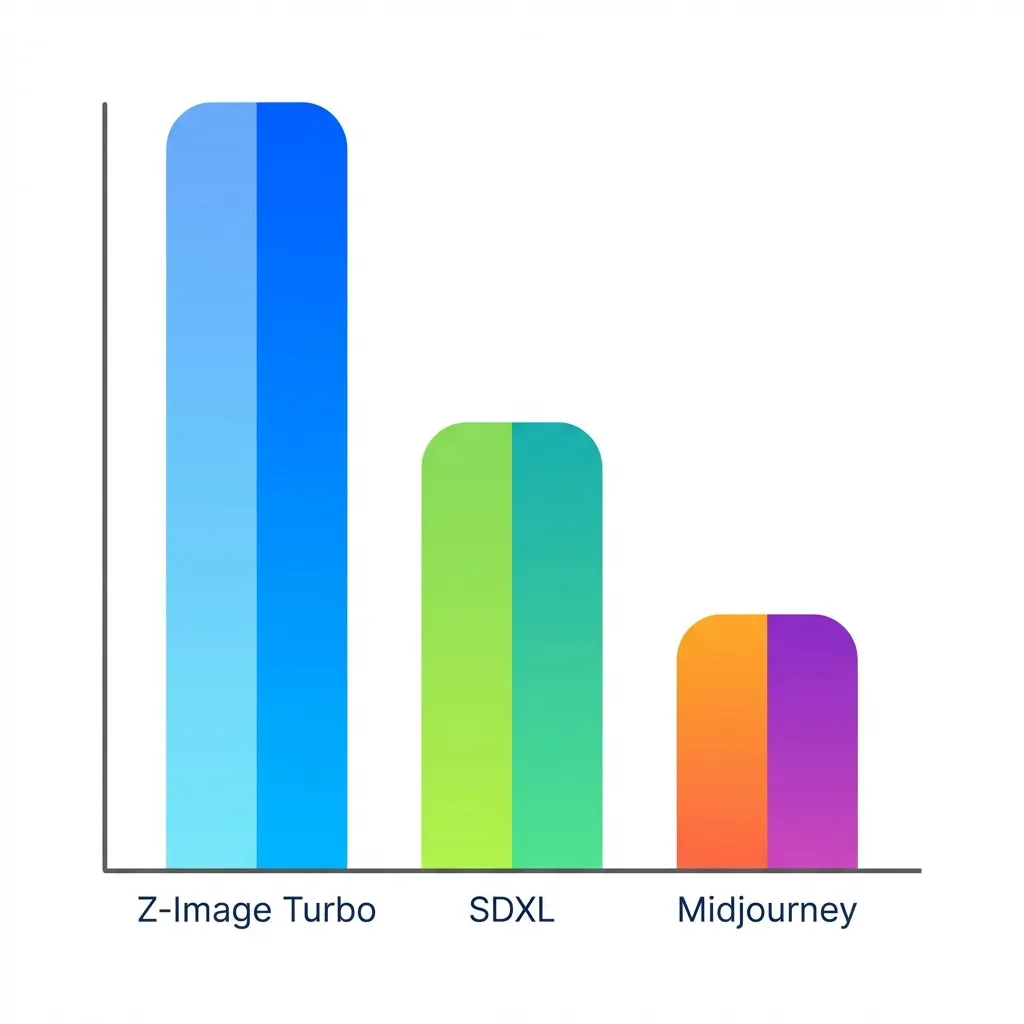
You can now achieve hyper-realistic lighting, skin textures, and cinematic composition with open weights. The comparison between Z-Image, Midjourney, and FLUX shows that the gap has narrowed to the point of invisibility for most use cases.
The difference? You own the model. You can fine-tune it on your own dataset—whether that's anime characters, architectural blueprints, or specialized medical imagery—without sharing your data with a third party.
Video is the Next Frontier
Just as image generation has matured, video is having its "Stable Diffusion moment." We are seeing the release of open weights for video generation that are actually usable.
Projects like LTX-2 are bringing the same open-source ethos to motion. Developers are basically getting access to a Hollywood studio in a Python script. If you are interested in where this is heading, keep an eye on the developments in LTX-2, which promises to bring consistency and physics-awareness to generative video.
Conclusion: The Bazaar Wins
Calls for "regulating AI" or "slowing down" have only accelerated the open-source community. Code cannot be un-written. The transparency, flexibility, and sheer speed of innovation in the open ecosystem like GitHub's trending AI repositories prove that the "Bazaar" model of development is superior to the "Cathedral" of closed corporate labs.
For developers, this is a golden era. We aren't just consumers of API endpoints anymore; we are the architects of the generative pipeline. Whether you are building with Z-Image, hacking on ComfyUI, or training your own LoRA, the future of creativity is running on localhost.