You’ve built the perfect engine.
The algorithms are flawless, the backend is a masterpiece of efficiency, and the UI is slicker than anything your competitors are putting out.
It’s beautiful. It’s fast. It’s mathematically perfect.
Yet, your user growth is flatlining.
Why? Because you’ve spent your entire budget optimizing the code, but you forgot to build the bridge.
In the world of SaaS — especially when dealing with sensitive information or personal finances — your technical brilliance is invisible to the user.
They don’t see your optimized database queries or your elegant monorepo structure.
They don’t care about your Zoneless change detection or your clever use of Signals.
They see a black box.
They see a prompt where they are asked to input their bank credentials, tax documents, or proprietary business data.
And if that box doesn’t feel like a vault, they’re going to hit the back button.
The Math Won’t Save You
Founders often fall into the trap of “Feature Obsession.”
They think that if they add one more dashboard widget or shave 50 milliseconds off the load time, the market will finally “get it.”
But trust isn’t a feature you can ship in a sprint.
In my experience working with massive financial institutions like BNP Paribas and Citibank, I learned a hard truth: people don’t trust apps because of the code.
They trust them because of the perceived safety and transparency.
When your math is right, but your product is failing, it’s usually because you have a Trust Gap.
You are asking strangers to hand over the keys to their business, but you haven’t given them a reason to believe you’re a responsible driver.
The “Agency Theatre” Trap
Let’s talk about where most SMEs lose the trust war before they even start: the software house.
You’re likely pouring money into bloated agencies that charge for “Project Management,” “Account Coordination,” and “Business Analysis.”
They love to sell you on these roles. They make the project feel “official.”
But what are you actually buying?
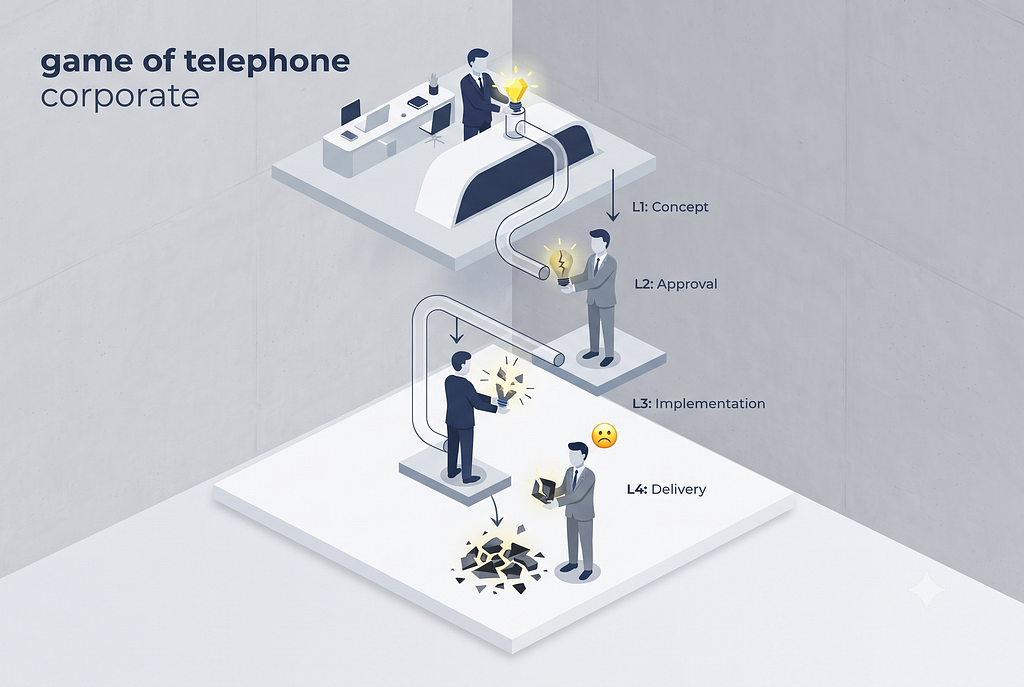
You’re buying a game of telephone.
You tell the Account Manager what you need.
They tell the Project Manager.
The Project Manager translates it for a Lead Developer.
And the junior developer, who is just trying to hit their sprint quota, actually writes the code.
By the time your requirement reaches the keyboard, the original business intent is gone.
It’s been diluted, misinterpreted, and sanitized by four layers of middle management.
And then you wonder why the product feels “off” or doesn’t move the needle on your conversion rates.
It’s not because the technology is bad.
It’s because the structure of the team is designed to manage hours, not to build trust or value.
Transparency is Your New Best Feature
If you are asking a user to trust you with their livelihood, you cannot afford to be mysterious.
Stop hiding behind generic “Terms of Service” agreements that nobody reads.
Stop burying your security protocols in a footer.
If your app is doing something complex with their data, tell them.
Explain why you need it, how it’s stored, and — crucially — what happens if things go wrong.
Don’t fear communicating uncertainty.
Users aren’t stupid; they know that no system is 100% infallible.
When you are honest about the boundaries of your technology, you actually increase your credibility.
Vulnerability is a sign of confidence, not weakness.
Modernization “On the Fly”
One of the biggest lies agencies tell you is that your current system is “too far gone” and must be written from scratch.
Why? Because rewriting is easy for them.
It’s a “greenfield” project. It’s clean. It’s fun.
But for you, it’s a death sentence for your current cash flow.
When I was at BNP Paribas or Silent Eight, we didn’t just “hit delete” on banking systems.
We performed surgery while the patient was running a marathon.
That’s what I bring to your SME.
We can eliminate that technical debt piece by piece, on the live product.
You don’t need a six-month “blackout” period where you stop selling.
You need an architect who knows how to swap the engine without stopping the car.
Human-Centric Design isn’t Just About Colors
We talk a lot about UX in tech, but we often confuse it with “making it look pretty.”
True human-centric design in the context of trust means acknowledging the user’s anxiety.
It’s about creating “psychological safety.”
Are you using clear, jargon-free language?
Are your error messages helpful and reassuring, or do they look like a system crash?
Are you providing human-readable explanations for the automated decisions your software makes?
An app that explains why a calculation was made is infinitely more trustworthy than one that just spits out a number.
If the user doesn’t understand it, they don’t trust it. Period.

You Are the Chief Trust Officer
If you’re a founder, stop acting like the lead dev and start acting like the Chief Trust Officer.
Your technical stack is a commodity.
Your reputation and the security you project are your competitive advantages.
If you want your product to move from “nice to have” to “mission-critical,” you have to prove you can handle the weight of your users’ trust.
Stop over-engineering the backend and start investing in the narrative of safety.
Stop chasing the “flashy” features that nobody asked for and start building the reliability that keeps users coming back.
Because at the end of the day, people don’t buy code.
They buy peace of mind.
Stop Funding Their Office Rent
I see it every day.
SMEs pouring money into software houses that charge for the privilege of existing.
Your budget should be 100% focused on engineering and architectural excellence.
When you work with an expert who has survived the trenches of banking and enterprise, you aren’t paying for “hours.”
You are paying for a partner who understands that every line of code must serve a business goal.
You get direct access.
No middle-men. No translation errors.
Just a senior architect who takes ownership of your product as if it were their own.
The Time to Pivot is Now
Are you ready to stop being an experiment and start being an enterprise-grade solution?
If you want to move beyond the technical “features” and start building a product that your users actually feel safe using, let’s talk.
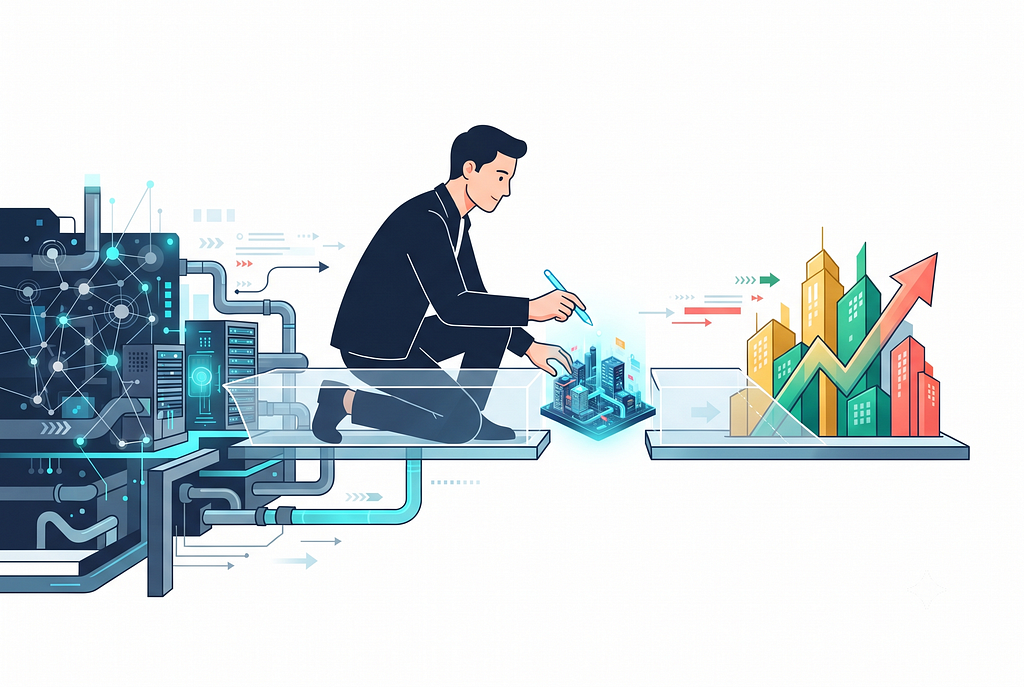
I help SMEs bridge the gap between complex engineering and real-world business trust.
Stop building for machines. Start building for humans who need to trust you with their business.
