The contemporary industrial landscape demands robust management frameworks in the face of extreme volatility. At the epicenter of this organizational and analytical architecture stands the monumental philosophy of W. Edwards Deming. Conceived in the early decades of the 20th century, his theoretical approach has transcended the factory floor to become the undisputed foundation of Sales and Operations Planning (S&OP) and the management of complex value networks.
Deming's fundamental premise postulates that quality is not achieved through massive end-of-line inspection, which is reactive and costly. True quality is born from reducing variation in the underlying processes.
The System of Profound Knowledge and Statistical Control
Deming proposed a radical managerial paradigm: the System of Profound Knowledge. This system requires that we optimize the "whole" (the interconnected network) rather than maximizing departmental silos. He taught us that variation is inherent to any activity, but the key to leadership lies in differentiating "chronic variation" (common causes) from "anomalies" (special causes) through Statistical Process Control (SPC).
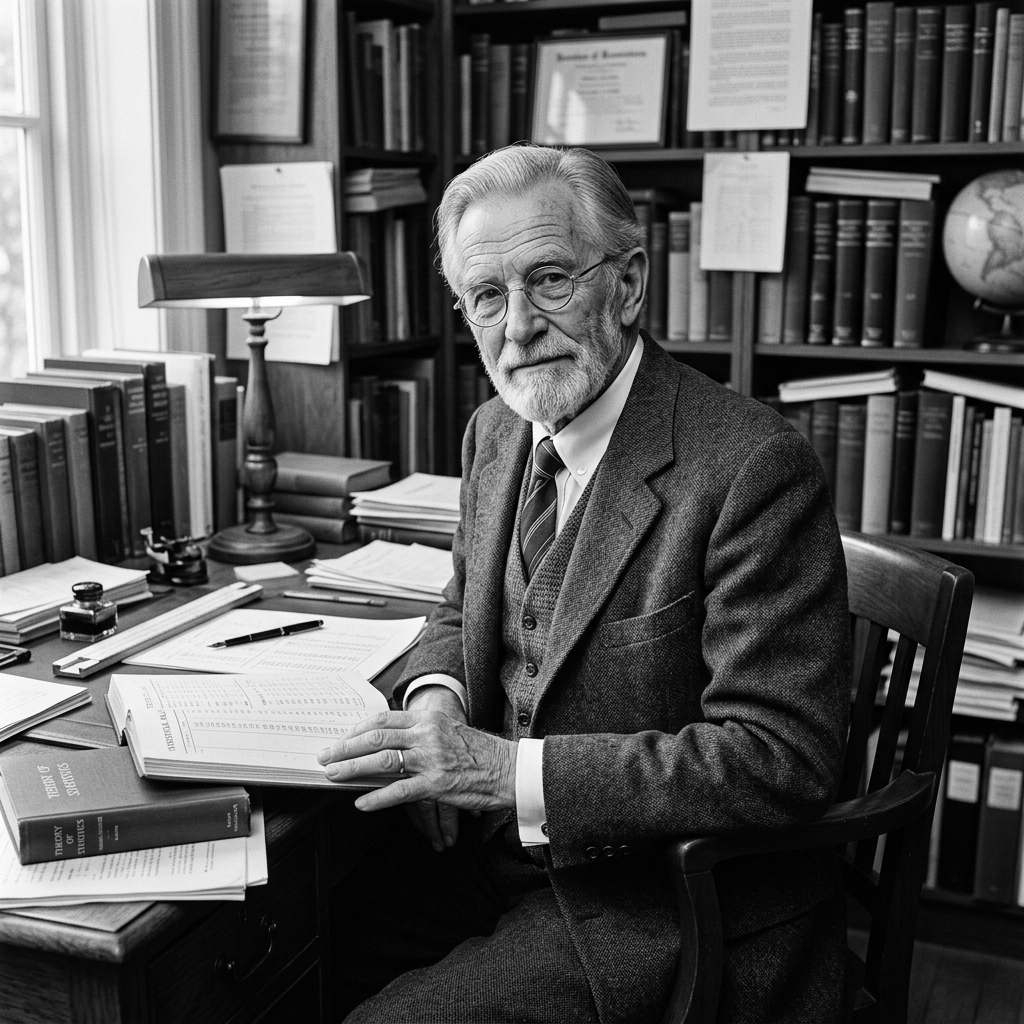
W. Edwards Deming
One of his most destructive insights toward traditional management was the concept of Tampering or over-adjustment. When management (for example, in monthly S&OP meetings) reacts to normal statistical variations as if they were systemic crises by drastically adjusting the plan, it paradoxically amplifies the disaster and increases instability. This is the root cause of why a fearful sales forecast breeds the infamous Bullwhip Effect in the supply chain.
Toyota and the Data-Driven Revolution
Deming's impact was most forcefully seen in the miraculous industrial reconstruction of post-war Japan. Toyota embraced his doctrine, instituting the famous PDCA (Plan-Do-Check-Act) cycle.
Before Deming, decisions depended on instinct. Afterwards, Toyota engineers understood that planning S&OP or designing plant capacity without statistically reliable data was equivalent to walking blindly toward obsolescence. Thanks to him, Toyota eradicated the philosophy of final inspection in favor of "building quality into the process," cementing what the world would later know as Lean Manufacturing.
The Technological Horizon: AI and Concept Drift
Perhaps the most astonishing proof of the immortality of Deming's mathematics is its current application at the frontier of Artificial Intelligence and corporate automation.
The golden rule of modern robotics is: "Stabilize before you automate, always". AI cannot infer precise causalities from a chaotic human workflow or noisy data. Deming's principles of standardization are inescapable prerequisites for any Machine Learning initiative.
Even more profound is how modern data science uses Statistical Process Control to audit AI models themselves. When a real-world predictive model begins to fail due to unforeseen macroeconomic changes (a phenomenon known as Concept Drift), engineers resort to multivariate control charts—essentially, Deming's statistical engine—to mathematically identify when the model is facing a "Special Cause" and requires retraining.
Conclusion
Deming's legacy warns us against blind faith in technology: the only way to tame AI, mitigate global disruptions, and optimize S&OP in our era is to subordinate the overwhelming raw computing power to the inexorable dictates of process stability and variance reduction. Statistical Control is not dead; in fact, today it orchestrates the algorithms that run the world.
References and Further Reading
