A few years ago, a simple CRUD app, a marketing site, or an internal dashboard could easily justify a $5,000+ freelance invoice.
Scoping, architecture, implementation, testing, iteration—it took weeks.
Clients accepted that.
Now?
You open Claude Code or Cursor, describe the app in a paragraph, and in a single afternoon you can have a working MVP with authentication, CRUD, and deployment scripts.
And suddenly your brain asks a brutal question:
“How can I charge $5,000 for something I can now build in two hours without feeling like a fraud?”
"AI didn’t just speed up my work. It detonated the mental model that my time and effort were the basis of my pricing."
The Efficiency Paradox: When Getting Faster Makes You Feel Cheaper
On paper, AI coding tools should be amazing for freelancers:
- higher productivity,
- faster delivery,
- more projects per month.
In reality, they create a paradox:
- if you keep charging by the hour, your income gets crushed;
- if you charge by the project, you feel like you’re overcharging because “it only took a day with AI.”
Meanwhile:
- clients are reading case studies about people building full platforms with Claude in a few weeks instead of six months with agencies;
- non-technical founders are using AI to do work they previously outsourced to freelancers entirely.
The result?
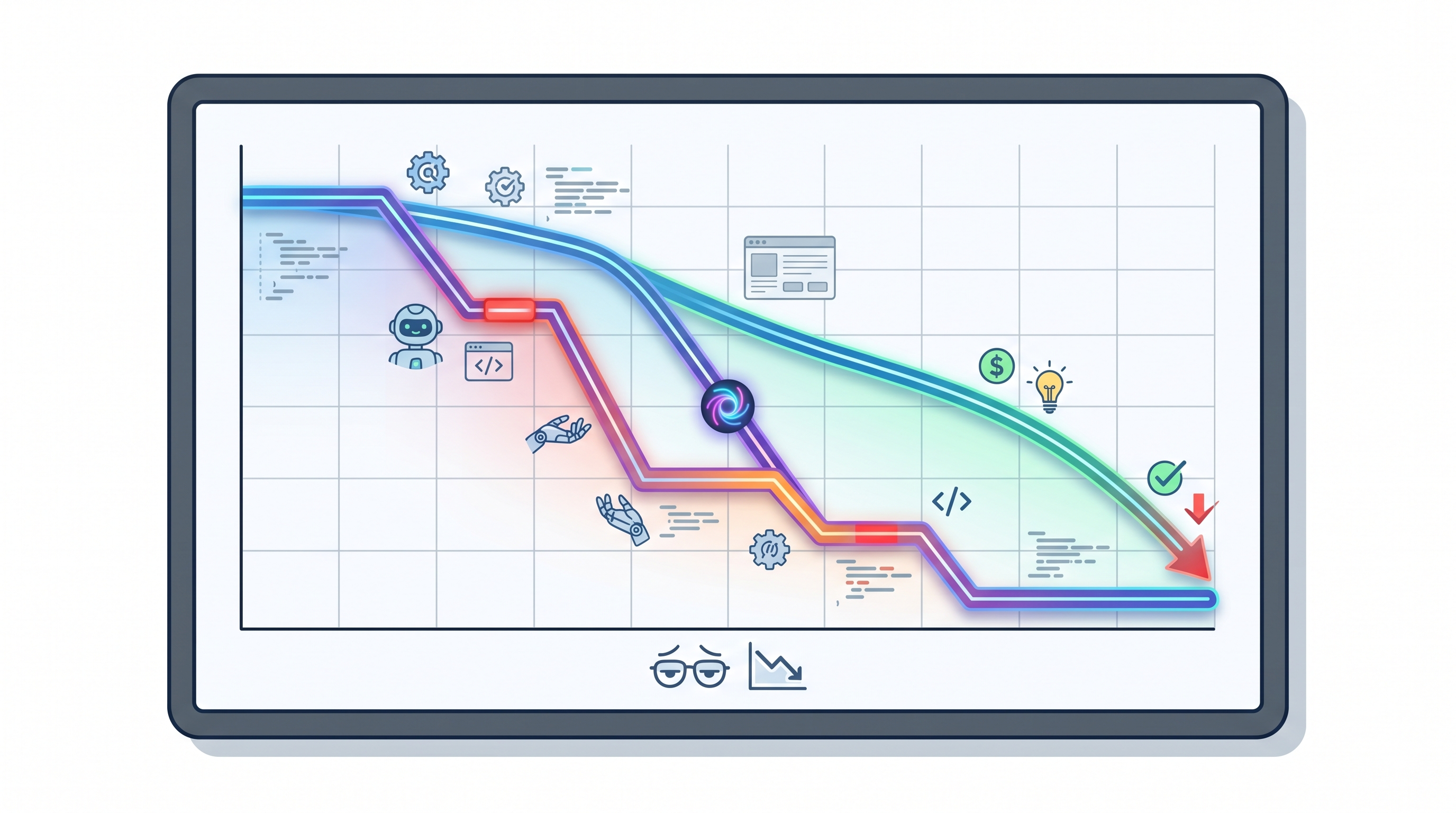
The middle of the freelance market starts to hollow out:
- low-end clients go straight to AI or to the cheapest “script kiddie” using AI badly;
- high-end clients still pay well—but only for people who can handle strategy, architecture, and risk, not just raw implementation.
"AI didn’t erase the need for developers. It erased the justification for mediocre, effort-based pricing."
Why Value-Based Pricing Suddenly Feels Like a Lie
For years, the advice was simple:
“Don’t charge by the hour. Charge based on value.”
That made sense in a pre-AI world where:
- your expertise was the main speed multiplier,
- your time and effort were visibly linked to the outcome.
In the AI era:
- you can build in days what used to take weeks;
- you can ship in hours what used to be “two sprints.”
That’s good for the client, but psychologically brutal for you:
- quoting $5,000 for something you can build in a day feels like a scam,
- quoting $1,000 feels “fair” but destroys your ability to run a business,
- going back to hourly rates gets you compared directly to cheaper devs and AI.
The real problem:
You are still anchoring your price on effort in your head, even while trying to talk about value in your proposal.
Your brain knows:
- “This took me 10 hours with AI, not 60.”
- So it quietly marks down what you feel allowed to charge.
Clients, meanwhile, don’t care about your hours. They care about:
- how much risk you remove,
- how much faster they go to market,
- how much revenue or efficiency your solution actually creates.
"The fraud feeling doesn’t come from value-based pricing. It comes from secretly pricing your self-worth in hours while pretending you don’t."
What Clients Are Actually Paying For (Hint: It’s Not Code Lines)
Look at how serious buyers pay for AI work today:
- experienced AI devs charge $75–$200+ per hour because they reduce risk and move faster, not because they grind more hours;
- AI agent platforms charge based on value metrics—tasks completed, SLAs hit, revenue lift—not just compute.
The pattern is the same for freelancers who survive this shift:
Clients are paying for:
Risk reduction
You stop them from wasting six months on the wrong architecture, wrong feature set, or wrong vendor.
Clarity and decision-making
You turn vague ideas into actionable scopes, MVPs, and roadmaps. AI doesn’t sit in stakeholder calls and push back on bad requirements.
Integration and ownership
You connect AI-built pieces to real systems: auth, billing, compliance, infrastructure, observability.
Trust and accountability
You are there when something breaks. You maintain, adapt, and iterate. AI is a tool, not an owner.
The code is becoming commoditized.
The outcome and risk management are not.
"Freelancers who keep selling code as if it’s scarce will feel undercut. Those who sell outcomes and risk reduction will feel in demand."
The Script Kiddie Problem: When AI Makes Amateurs Look “Good Enough”
Claude, Copilot, Cursor, and every other assistant just gave every beginner a temporary superpower:
They can:
- scaffold apps,
- glue tutorials together,
- and produce surprisingly decent demos.
To non-technical clients, that looks “close enough” to what you do—especially on small projects.
Why pay $5,000 when:
- someone on Upwork offers $500,
- or the client can brute-force something with AI for the cost of a subscription?
This is where the middle gets hollowed out:
- if your positioning is “I build websites / CRUD apps / dashboards,” you are now interchangeable with AI‑assisted juniors;
- the top of the market—complex systems, serious budgets, strategic work—is still there, but requires a completely different pitch.
The uncomfortable truth:
AI has lowered the bar for “good-enough output,” so only being “technically competent” is no longer enough to justify mid-to-high freelance pricing.
"The script kiddie with Claude is not your direct competitor. Your real competitor is your own refusal to move up the value chain."

How to Price in the AI Era Without Feeling Like a Fraud
If you want to keep charging real money while using AI, you need to change what’s on the invoice.
You can’t just write:
- “Web app development – 40 hours”
and secretly know it took 8.
You need offers that make sense even when the work is fast.
Think in terms of packages and outcomes, not tasks:
Discovery + design + implementation
- Clarify the problem, run a strategy workshop, define success metrics, then build the MVP—with AI as your power tool.
MVP in 2 weeks, validated with users
- You are not selling screens. You are selling “a thing we can put in front of customers in two weeks and learn from.”
Migration / modernization
- Move a legacy system to a new stack, keep data safe, minimize downtime, and document everything. AI accelerates—but the risk is still real.
AI integration / automation
- Connect their existing tools, build agents or workflows, and own the reliability and monitoring.
Price for:
- the risk you’re taking on,
- the business impact,
- the speed to a meaningful outcome—
not for the keystrokes.
"Value-based pricing only feels honest if the thing you’re selling is a value narrative, not a disguised time estimate."
Concrete Levers to Survive (and Win) the AI Pricing Crisis
Some practical shifts that move you out of the danger zone:
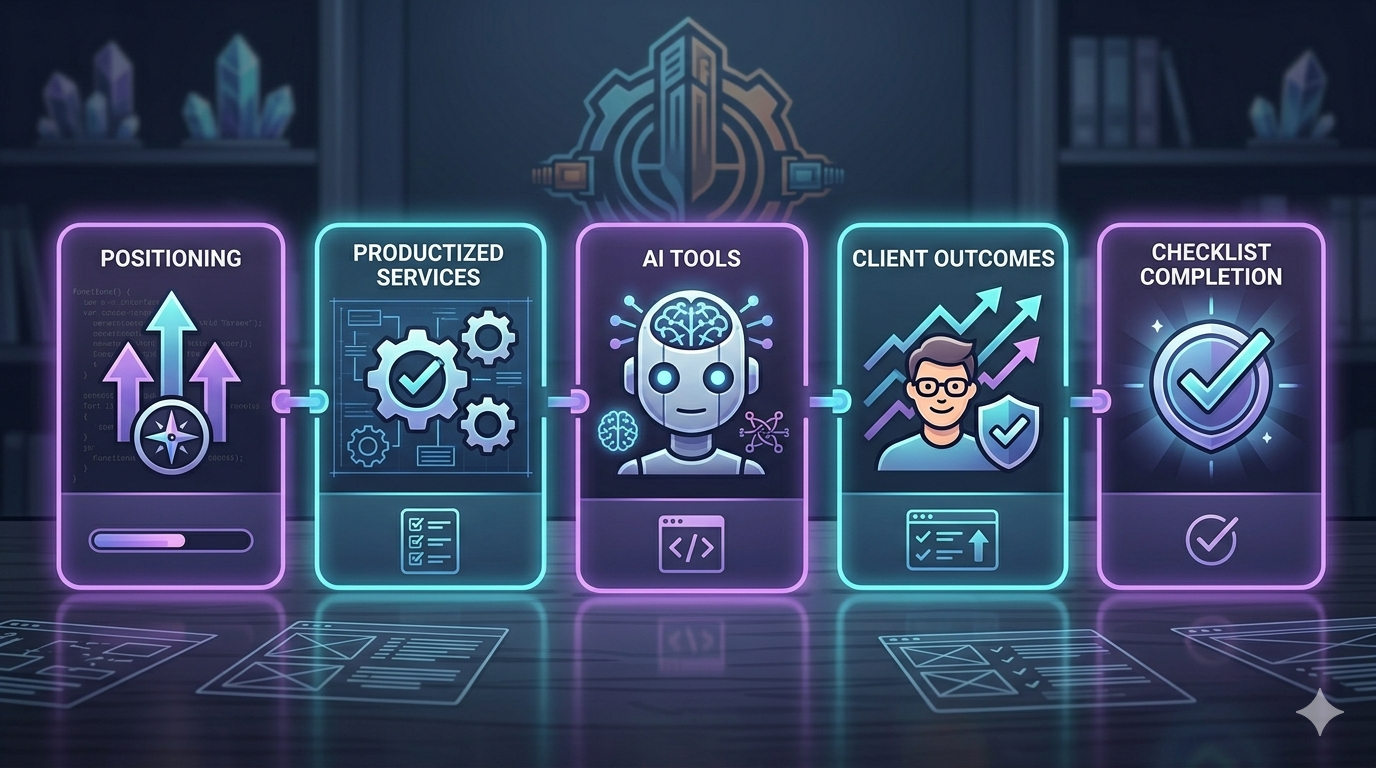
Rewrite your positioning
Replace “I build X with Y framework” with:
- “I help [niche] achieve [business goal] with software and automation.”
Show your thinking, not just your builds
Share teardown threads, architecture breakdowns, “here’s why this approach works.”
That’s how you signal that clients are buying your brain, not just your typing speed.
Sell productized services
Example packages:
- “MVP Launch Week”
- “Analytics & Automation Audit”
- “Migration Risk Assessment + Plan”
Clear scope, clear outcome, fixed price.
Lean into AI visibly, not secretly
Tell clients:
- “Yes, I use AI heavily—that’s how I move fast. You’re paying for knowing what to build, what to trust, and how to keep it alive.”
Keep a floor on your pricing
If you drop to $300 projects “because AI made it easy,” you are training the market—and yourself—to believe your work is cheap.
"The freelancers who survive are not the ones who hide AI. They’re the ones who can explain why using AI makes them even more worth the money."
The Future: Fewer Freelancers, Stronger Positions
Generative AI is absolutely reshaping the freelance market.
Studies already show: some segments of digital freelancing see collapsing demand as clients use AI or in-house tools instead. At the same time, specialized AI and software freelancers at the top end are charging more because they’re tied to high-impact work.
The likely outcome:
- fewer freelancers doing generic implementation work,
more freelancers:
- embedded as fractional CTOs / product leads,
- owning automation and AI workflows,
- selling consulting + implementation bundles.
If you insist on:
- billing by the hour,
- marketing yourself as “a pair of hands,”
- competing with whoever is cheapest + AI,
the AI pricing crisis will feel like a slow suffocation.
If you:
- move up-market,
- sell outcomes and risk reduction,
- and treat AI as your exoskeleton,
you can absolutely justify $5,000 (or more) while building faster than ever.
"AI is not killing value-based pricing. It’s killing lazy value stories that were secretly still about hours. The rest of us now have to grow up."
I fix the Angular apps that generalists break.
I’m Karol Modelski, senior Angular developer and frontend architect rescuing legacy B2B SaaS frontends.
If your Angular app is slowing your team down, start with a 3‑minute teardown of your current setup: https://www.karol-modelski.scale-sail.io/