A lot of self-taught developers think perfectionism is a virtue.
You obsess over:
- the “right” folder structure,
- the “cleanest” abstraction,
- the “correct” testing strategy for a to‑do app you never ship.
Underneath that, there’s usually one thing:
a brutal, silent fear of being judged.
So you keep polishing, keep refactoring, keep “learning more” instead of showing your work to real people.
"Perfectionism feels like a high standard. Most of the time, it’s just fear wearing a respectable outfit."
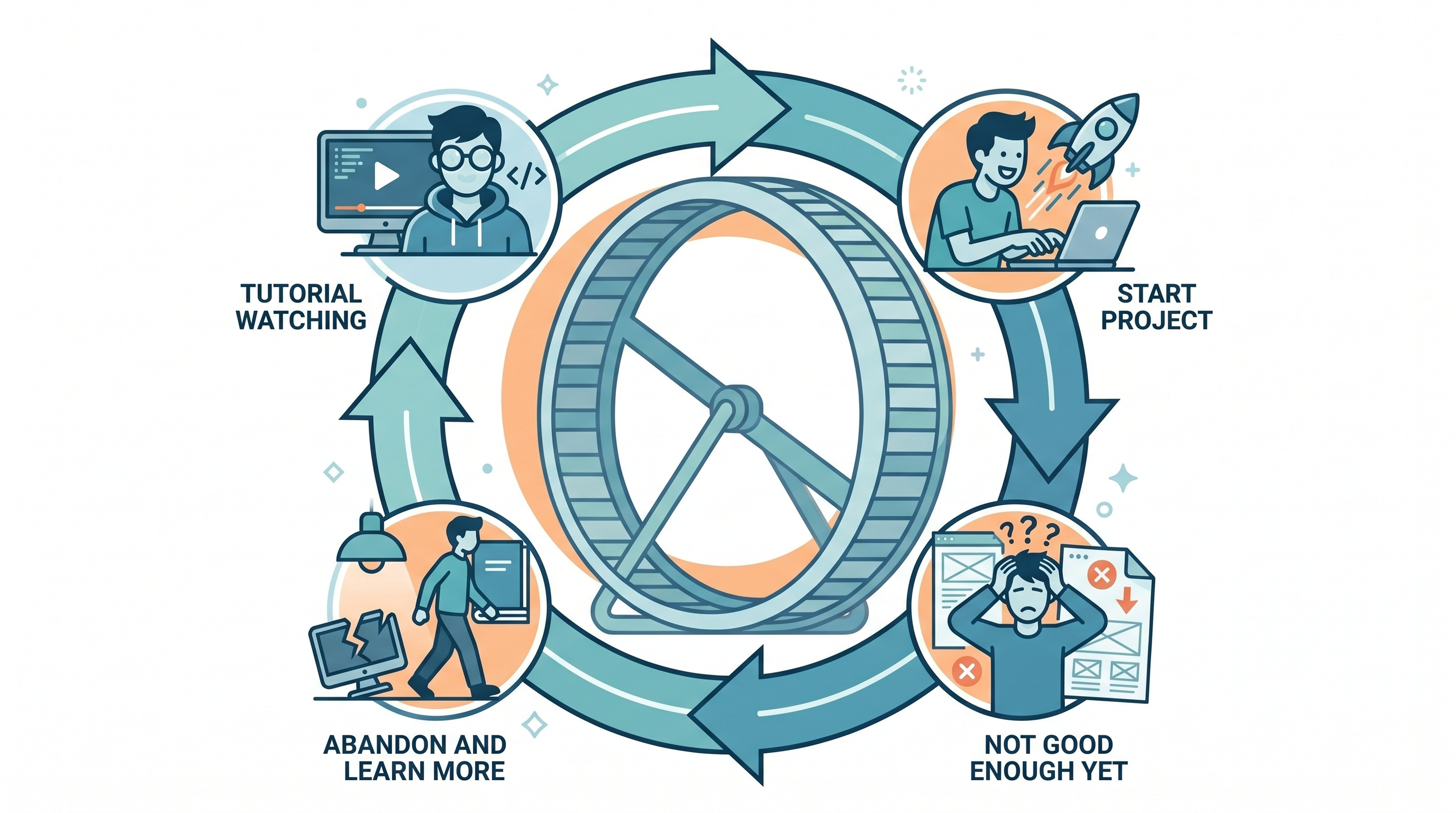
The Self-Taught Developer’s Loop of Death
If you’re self-taught, your path probably looks like this:
- binge tutorials,
- start side projects,
- never finish them,
- because “they’re not good enough yet.”
You tell yourself:
- “I’ll start freelancing when I’m better.”
- “I’ll take clients when I’m sure I won’t embarrass myself.”
- “I just need one more course before I’m ready.”
Meanwhile:
- your GitHub is full of half-finished repos,
- your portfolio has three “coming soon” sections,
- your confidence is shrinking, not growing.
You are not gaining:
- real feedback,
- real constraints,
- or real trust in your abilities.
You are just getting better at learning in the dark.
"You’re not stuck because you’re underqualified. You’re stuck because you refuse to be seen as anything less than perfect."
Clients Do Not Want Perfect Code
There is one thing you need to internalize if you ever want to freelance:
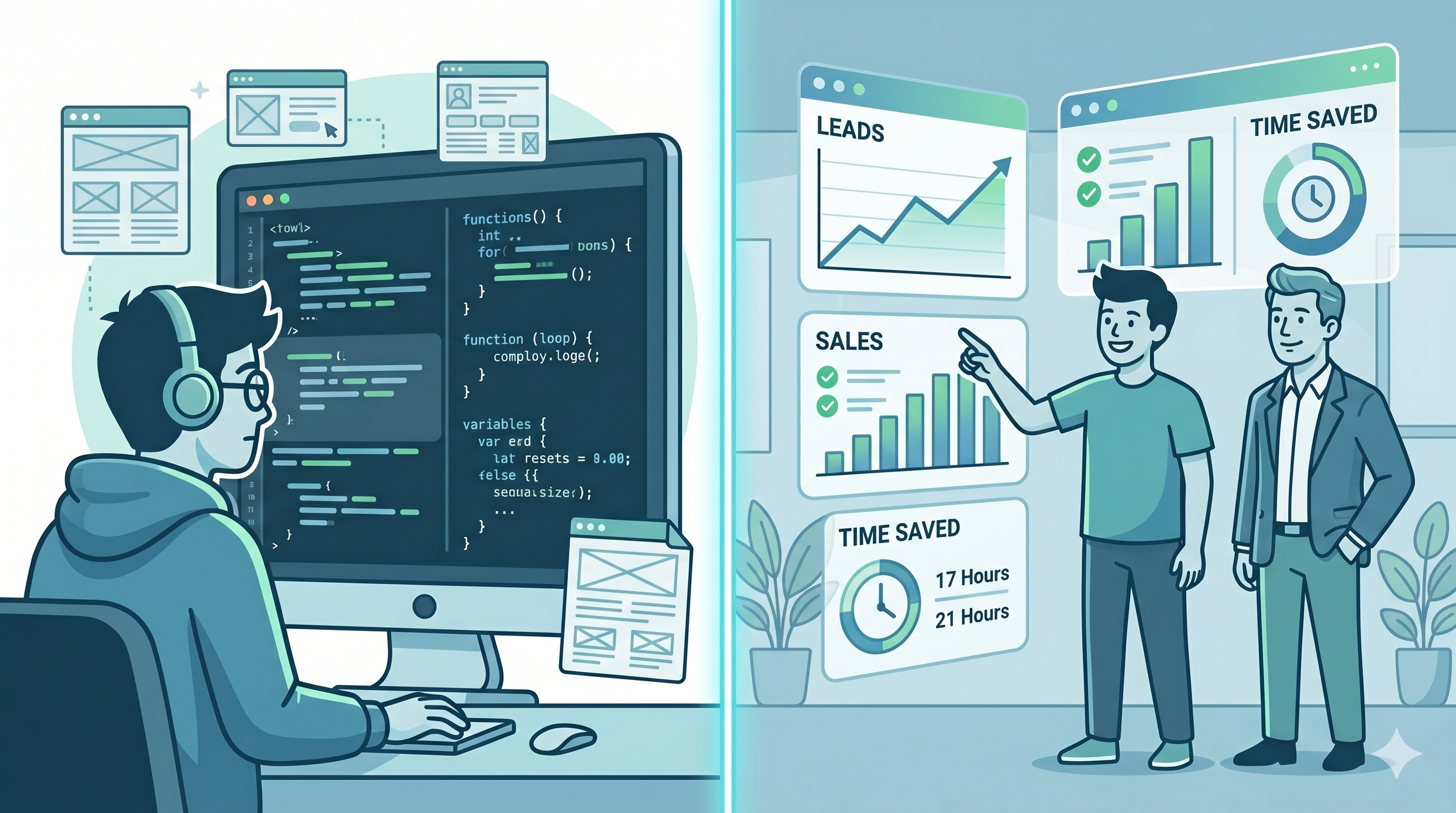
Clients do not buy code. They buy outcomes.
They care about:
- “Does this solve my problem?”
- “Will this make or save me money?”
- “Can I trust this person when something breaks?”
They do not care about:
- whether your component composition is award‑winning,
- whether your TypeScript generics are elegant,
- whether your CSS is fully BEM‑compliant.
Most clients cannot even read your code. The ones who pretend to understand it are often just trying not to look ignorant.
And yet, you treat every tiny imperfection like a moral failure:
- a missing edge case,
- a messy function,
- a bug that slipped through.
Here is reality:
- every serious product ships with known imperfections,
- most bugs get discovered in production anyway,
- what matters is how fast you respond and how reliable you are.
"Clients aren’t looking for perfection. They’re looking for progress, responsiveness, and someone who takes responsibility."
Your Fear of Bugs Is Not Humility. It’s Ego.
This part hurts:
Most “fear of judgment” stories are not about humility.
They’re about ego.
You are not actually afraid that:
- the app will be unusable,
- the entire system will crash.
You are afraid that:
- someone will think you’re not as good as you say you are,
- a bug will expose that you are not “really a developer,”
- your self‑image will crack.
So you:
- avoid code reviews,
- avoid shipping,
- avoid freelancing conversations,
- avoid showing your work to anyone who could say, “This isn’t perfect.”
That is not caution. That is self‑protection at the cost of your career.
Humility says:
- “I will ship the best I can right now, and I’ll fix what breaks.”
Perfectionism says:
- “If it’s not flawless, nobody is allowed to see it.”
Only one of those paths leads to becoming a professional.
"Refusing to ship until it’s perfect is not protecting clients from bad work. It’s protecting your ego from normal feedback."
Freelancing Is Not for Developers Who Wait for Perfection
Freelancing is a public sport.
You are constantly:
- making promises,
- making trade‑offs,
- making mistakes where people can see them.
If your default state is:
- “I will only take on clients when I’m sure nothing will go wrong,”
you will never start.
Because freelancing guarantees:
- unclear requirements,
- last‑minute changes,
- weird edge cases in production,
- tech you haven’t used before.
Clients don’t hire freelancers because everything is known.
They hire freelancers precisely when things are not clean and predictable.
Your job is not to guarantee perfection.
Your job is to:
- listen carefully,
- ship something concrete,
- fix what breaks,
- communicate like an adult.
"If you need a zero‑risk environment to function, freelancing will eat you alive. Ship, learn, adjust—or get out."
How to Break the Perfectionism Cycle and Actually Start
You do not beat perfectionism by reading more about perfectionism.
You beat it by shipping in ways that are structured to feel scary but survivable.
A few practical steps:
1. Lower the stakes on purpose
Stop making your first “public” project a full SaaS with subscriptions and multi‑tenant RBAC.
Instead:
- build a tiny tool for a friend’s business,
- ship a landing page with a contact form,
- create one automaton (Zapier/n8n/Make) that saves someone an hour a week.
Smaller scope = smaller emotional explosion when something breaks.
2. Time‑box “polish loops”
Give yourself:
- one pass for functionality,
- one pass for obvious clean‑up,
- then you ship.
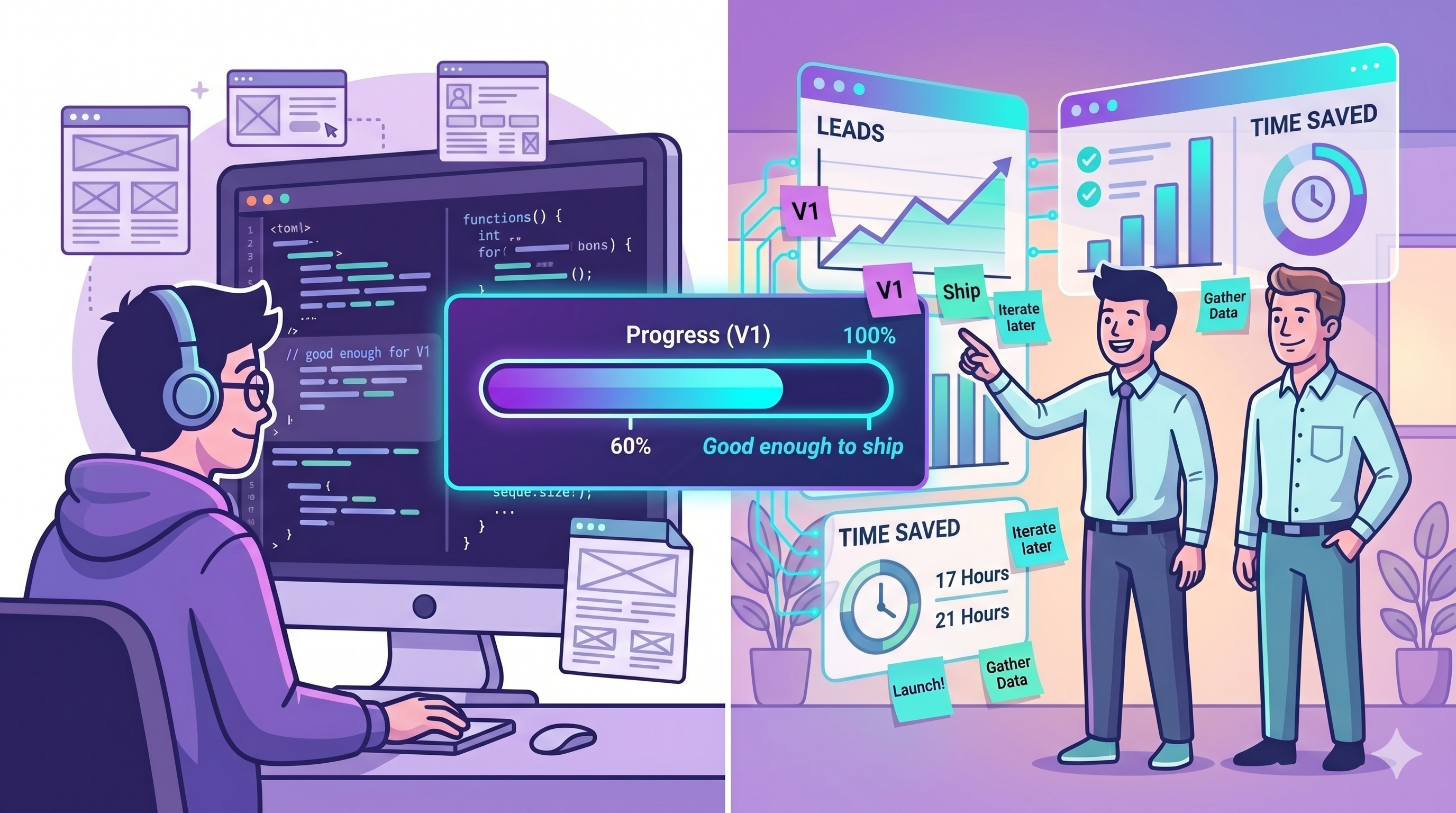
Anything beyond that goes into a “V2 improvements” list.
3. Force feedback earlier
Do not disappear for weeks and then hope the client loves your “perfect” version.
Show:
- ugly wireframes,
- half‑done UIs,
- basic flows that barely work.
Clients gain trust when they see progress, not when they see perfection after a long silence.
4. Define “good enough” before you start
Write this down per project:
- must‑have: cannot ship without
- nice‑to‑have: can wait for later
- not‑now: explicitly excluded
If you have not defined this, your default will be “everything must be flawless,” and you will drown.
"The antidote to perfectionism isn’t carelessness. It’s defining clearly what ‘good enough to ship’ means before your feelings get involved."
Professionals don’t ship perfect work.
They ship work that:
- solves a real problem,
- is maintainable enough,
- can evolve,
- and improves over time.
They measure themselves by:
- how quickly they turn feedback into improvements,
- how well they communicate when things go wrong,
- how consistent they are over months and years.
As a self‑taught dev, you have one huge advantage:
you are already good at learning on your own.
The missing piece is showing your work before you feel ready.
That is the muscle freelancing demands:
- publish the portfolio, even if it’s not your dream aesthetic,
- take a small client, even if you’re nervous,
- send the invoice, even if your inner critic is screaming.
You will never fully “solve” fear of judgment.
You just become someone who ships anyway.
"Your career does not start the day you feel ready. It starts the day you’re willing to be seen as imperfect and still show up."
I fix the Angular apps that generalists break.
I’m Karol Modelski, senior Angular developer and frontend architect rescuing legacy B2B SaaS frontends.
If your Angular app is slowing your team down, start with a 3‑minute teardown of your current setup: https://www.karol-modelski.scale-sail.io/