
If you run paid social campaigns for a DTC skincare or beverage brand, you know that creative fatigue usually hits around day ten. Your best-performing 15-second video ad suddenly drops in thumb-stop rate, not because the core product demonstration is bad, but because the same opening 3-second visual hook and background setting have been shown to your target audience four times already. Organizing a traditional studio reshoot just to test four new opening hooks and five lifestyle environments takes weeks and costs thousands of dollars.
Over the past week, I tested a structured 4 × 5 variation matrix inside AdMultiplier to see how performance marketers take a single winning reference video and spin out 20 localized 720p ad variants while keeping the hero product bottle 100% locked.
Why Changing One Creative Layer at a Time Beats Random Remixing
When media buyers evaluate visual generation models on the public Artificial Analysis Text-to-Image and Video Leaderboards, the goal for performance ads is not abstract artistic novelty—it is isolating which variable actually drives click-through rate (CTR) and return on ad spend (ROAS).
If you change the actor, the spoken hook, the lighting, and the product angle all at once, your A/B test tells you nothing about why Variant B beat Variant A. Inside the AdMultiplier workflow, you upload one master reference video (MP4/MOV up to 100MB) and lock the product SKU geometry while varying two controlled axes:
- Axis 1 — 4 Opening Visual Hooks (
0s–3s): Swap only the opening three seconds (e.g., macro texture pour, bathroom mirror morning routine, gym bag pull-out, or sunny poolside counter) to test thumb-stop retention.
- Axis 2 — 5 Demographic & Environment Contexts: Adapt the surrounding room and talent styling across five regional markets while keeping the exact same label typography and bottle reflections.
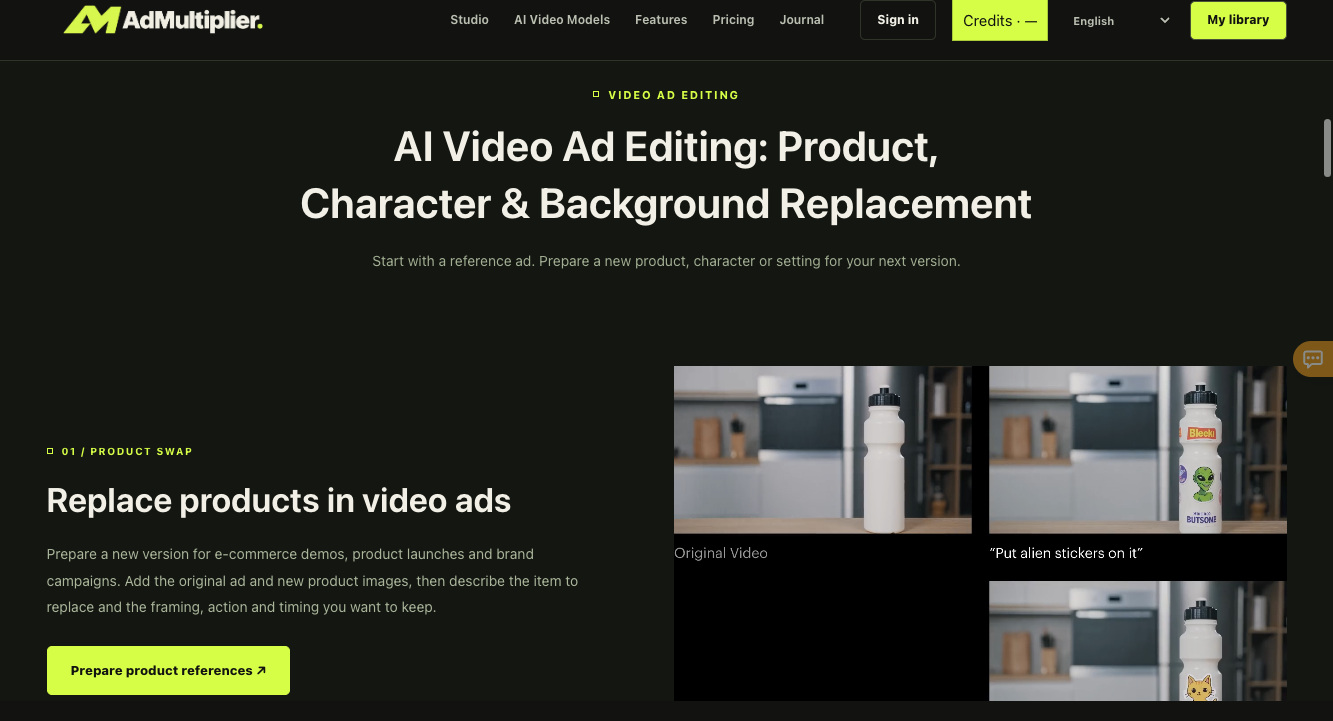
Source: admultiplier.org Video Ad Variation & Remix Studio
The 22 Credits/Second Math for a 20-Ad Testing Sprint
Because the platform bills at a flat, transparent rate of 22 credits/second for 720p social-ready output (with 100 free trial credits on signup), you can calculate your exact creative testing cost before launching a campaign:
| Ad Testing Strategy | Clips Produced | Credits Per 15s Clip | Total Campaign Spend | Effective Cost Efficiency |
|---|
| Blind Full-Clip Re-Renders | 20 Full 15s Videos + 40 Failed Takes | 330 Credits (15s × 22) | 19,800 Credits | High waste on untested 3-second hooks |
| Two-Stage Hook-First Matrix | 4×5 Hook Scouts (5s) -> Top 8 Full 15s Ads | 110 Credits (5s) / 330 Credits (15s) | 4,840 Credits | 75.5% Credit Reduction by pruning weak hooks at 5s |
AD VARIATION MATRIX PROMPT (ADMULTIPLIER — 720P @ 22 CREDITS/S):
Lock Hero Product SKU from Reference Video 1 (frosted amber vitamin C serum dropper bottle). Keep hand grip and dropper squeeze motion identical.
- Variant Group A (Nordic Daylight Loft): Pale birch countertop, cool morning window light, minimalist linen sleeve.
- Variant Group B (Mediterranean Terracotta Patio): Warm golden-hour sunlight, travertine stone ledge, olive branch shadow.
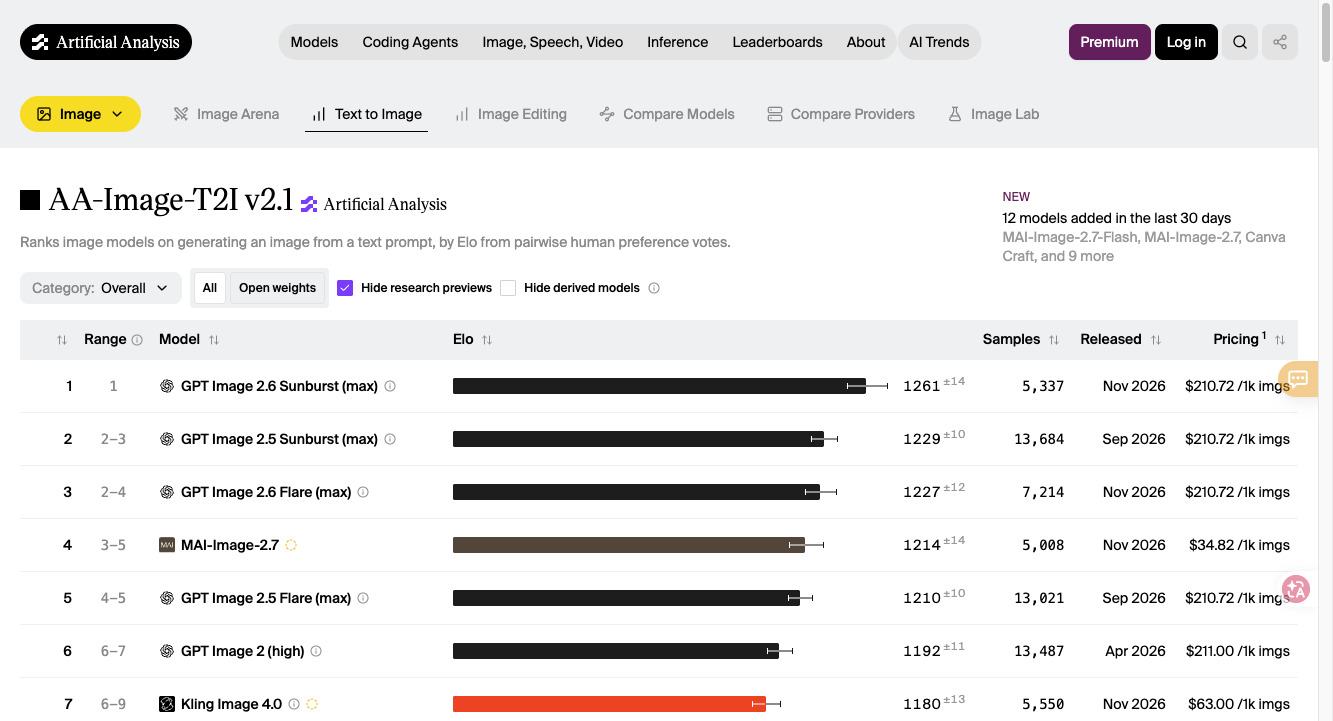
Source: Artificial Analysis Visual Generation Leaderboard
Two Practical Rules From Running 20-Variant Batches
- Use a clean, well-lit master video with minimal motion blur: The SKU geometry lock reads your product label from the uploaded source video. Starting with a sharp, well-lit 1080p source file ensures the bottle lettering stays crisp across all 20 remixes.
- Test 5-second hook slices before rendering full 15-second bodies: At
22 credits/second, a 5-second hook test costs just 110 credits. Only render the full 15-second body for hooks that pass your internal visual review.
You can upload a reference spot and test the 4 × 5 ad variation workflow directly on AdMultiplier.