During my onboarding project with Apryse, I got really fixated on redaction. I had a fundamental understanding of what redaction was, but I'll be honest in saying it's mostly from media and news where there is a document of some kind where sensitive information have been covered with a big black bar, sometimes even a Sharpie. I can't see the information, but I can see the rest of the original document and remaining info. For a physical document, that may be enough to say the information has been "redacted."
Turns out, that's only part of how redaction works and even a bit misleading.
Redaction is a multi-step process that involves identifying and completely removing the information, not just obscuring or covering it up. You can identify the content manually by marking or annotating the region or text you want to redact, or you can do this programmatically, identifying the region or text with a pattern like regex. Then you actually do the removal, where the marked content is destroyed, not just blacked out or covered. It cannot be viewed manually with your eyeballs or programmatically. It's gone.
The process looks like this:
- Identify content to remove.
- Place redaction marks on it.
- Review and edit the marks if needed.
- Apply the redactions to permanently remove the content.
- Save the file to finish the process.
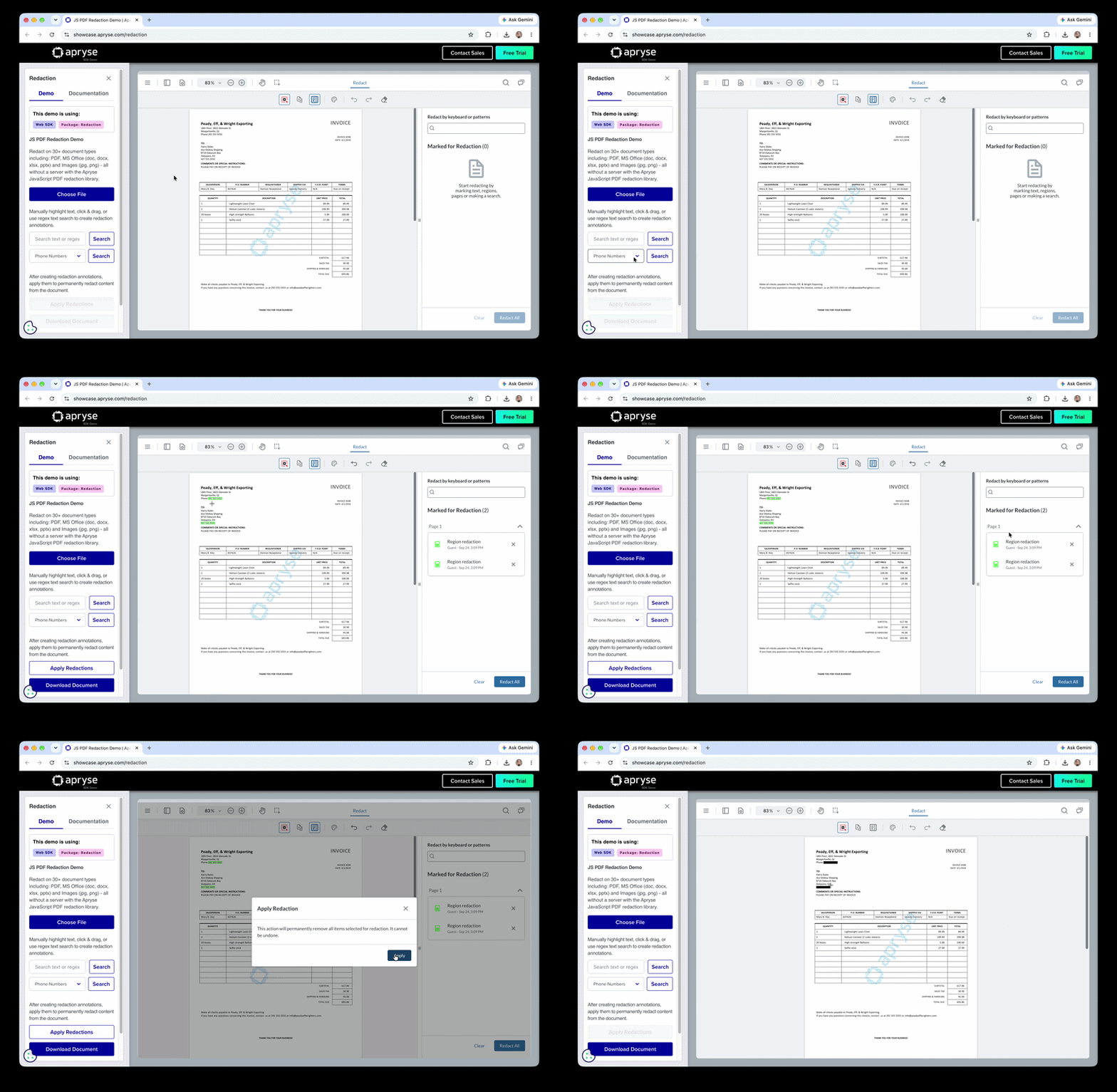
☝🏼 Run this showcase example yourself!
Marking the content is editable but once the redaction is applied the content is fundamentally changed and the process cannot be reversed.
A common misconception is the redacted info is just covered or blacked out, and in some poorly implemented redaction processes, this may very well be the case. The data may still be recoverable or the metadata still exists, and the redaction just isn't complete. This is a security and legal nightmare if you are working with sensitive information. One best practice is to verify the redaction is complete by simply trying to find and annotate the same information. It shouldn't work because the information is not there anymore!
When I was working with Claude, I got a great pointer about redaction with Apryse:
Redaction is a genuine two-step content-removal process — you apply redact annotations, then call the redactor to destroy the underlying image/text/vector data rather than just masking it — that matters for an insurtech claims tool, since a black box over PII that's still recoverable in the file is a compliance incident waiting to happen.
☝🏼 Claude's mention of "insurtech claims tool" was part of the use case that I was working with during my onboarding project.
So when you see "true redaction" this is just the added emphasis on actually permanently removing the data. It's not still selectable or extractable underneath a black box. It's not simply covered up.
I recommend these two blogs for more reading about redaction with Apryse:
I'd love to hear from folks working on document solutions, particularly ones using redaction. What does your redaction process look like? What your ran into any issues or weird edge cases?
For other folks, what was your understanding of redaction before reading this blog? Was it similar to mine and largely based on portrayals in the media?
And a bonus question for the non-native English speakers - in your native language, what is the word that relates to this kind of "redaction," or are there several? We want to remove the data, not just reduce or lessen it. What's the word for that?
Illustration by Annie Spratt on Unsplash