Why Multi-Tenancy Matters
Imagine you are building a SaaS application.
You have 100 companies, but you don't want to deploy and maintain 100 separate applications.
That's where Multi-Tenancy comes in.
What is Multi-Tenancy?
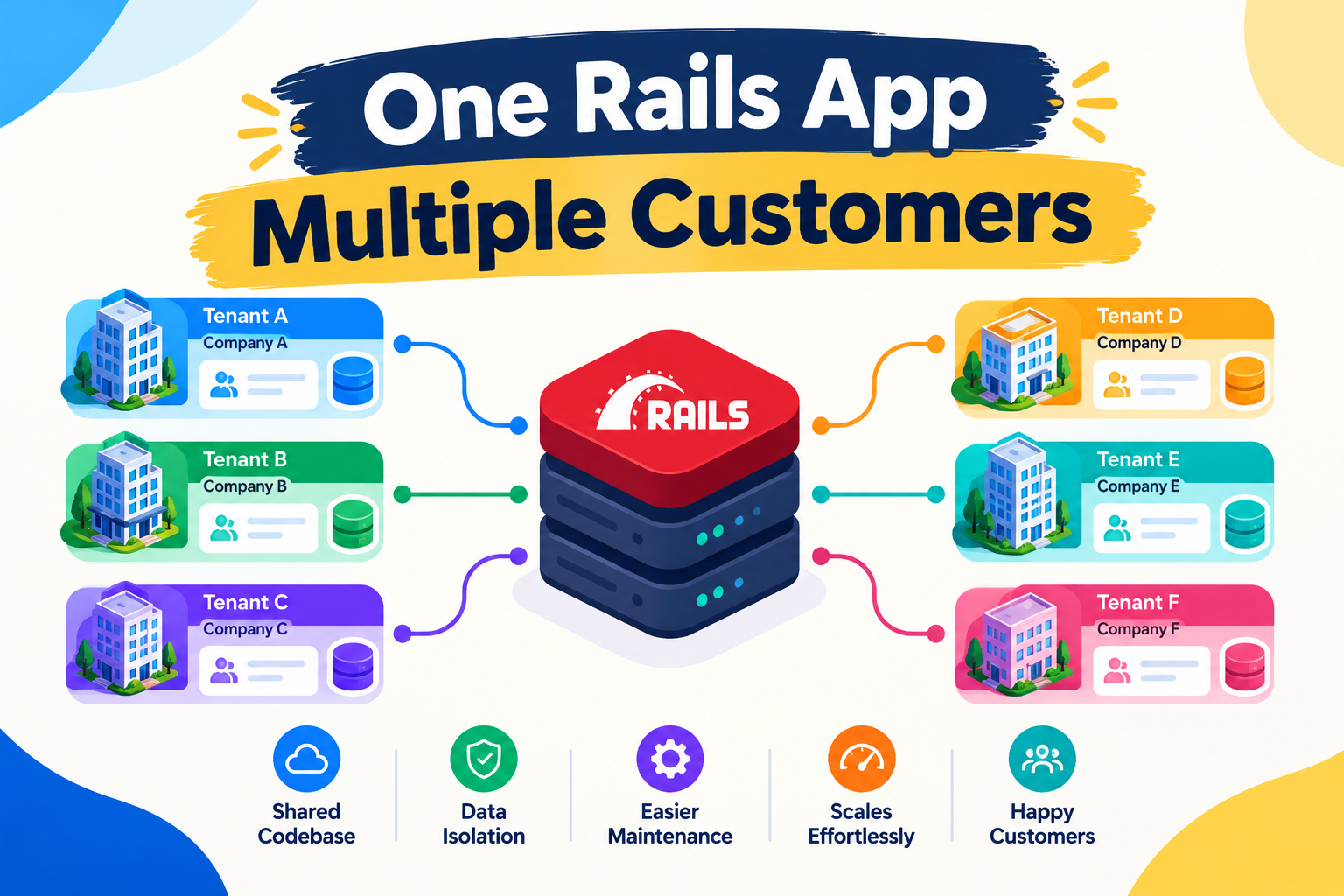
Multi-tenancy allows a single application to serve multiple customers — called tenants — while keeping each tenant's data isolated.
For example:
                    Rails Application
                           │
          ┌────────────────┼────────────────┐
          ↓                ↓                ↓
       Tenant A         Tenant B         Tenant C
       Company A        Company B        Company C
          │                │                │
       Users/Data       Users/Data       Users/Data
Each company uses the same application, but should only be able to access its own data.
How can we implement it with Rails?
A common approach is adding a tenant_id to tenant-owned tables:
class User < ApplicationRecord
  belongs_to :tenant
end
Then queries are scoped to the current tenant:
current_tenant.users
For larger systems, another approach is database-per-tenant, where each customer gets a separate database.
The right strategy depends on your scale, security requirements, infrastructure, and operational complexity.
Why use Multi-Tenancy?
1️⃣ Lower Infrastructure Costs
One application can serve many customers instead of running separate deployments.
2️⃣ Easier Maintenance
Deploy features and bug fixes once instead of updating every customer environment.
3️⃣ Faster Scaling
You can scale application servers and background workers as the customer base grows.
4️⃣ Better SaaS Architecture
Multi-tenancy fits naturally with subscription-based products where many businesses share the same platform.
5️⃣ Centralized Development
One codebase means consistent features, security updates, and improvements across tenants.
⚠️ The important part
Multi-tenancy isn't simply adding a tenant_id.
You need to think about:
Data isolation
️ Authorization
️ Database architecture
⚡ Caching
Background jobs
Reporting
Tenant-aware integrations
A single missing tenant filter can become a serious data-isolation problem.